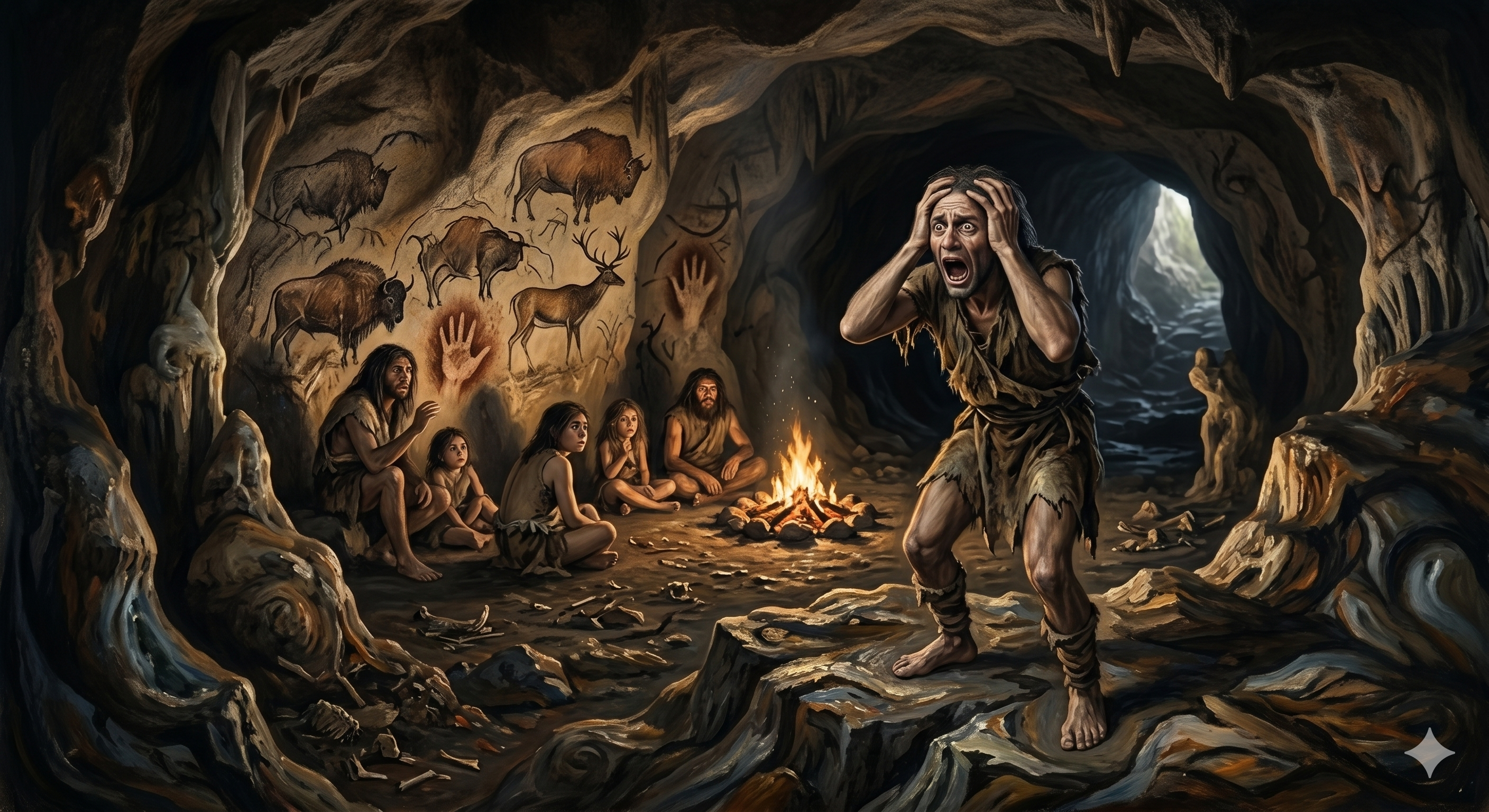
As an experiment; let’s imagine that we select a small group of people from the 21st century and send them back thousands of years to live alongside our earliest ancestors in their caves. Let’s assume that, somehow, they are able to communicate through a shared language. The group we sent provides information about their own era and speaks of the future state of the world.
Because the fears of these two groups intersect in the struggle for existence, our ancestors would understand the root causes of fear—even if we described different subjects, events, or catastrophes. The end of one’s own life or the lives of loved ones, suffering, loneliness, hunger, thirst… All of these represent the immutability of “the human condition,” or more broadly, the inherent tax of being a living creature.
There is, however, only one thing we could mention that they would not understand: The fear of God and the afterlife.
For our first ancestors, who had not yet encountered a creator, this would be incomprehensible. We do not know exactly at what point we began searching for answers regarding what lies beyond death. But this quest must have begun with the feeling of “voids of meaning” within our existence. Such a search had not yet started for the cave dwellers of thousands of years ago. They did possess various curiosities and thoughts that transcended being a mere mammal; the earliest cave paintings and various life-easing tools are proof of this. Yet, the essential goal back then was simply to survive.
When did that first question of “Why?”—that crushing void—arrive, and how? This is exactly why our team was sent: to seek this answer. They will discover the beginning of this “depriving void,” the moment when one stops despite everything and screams, “But why?”—which is, in essence, the beginning of time.
Was this feeling always there, or is it an evolution of fear? We shall see together.
Bir Cevap Yazın